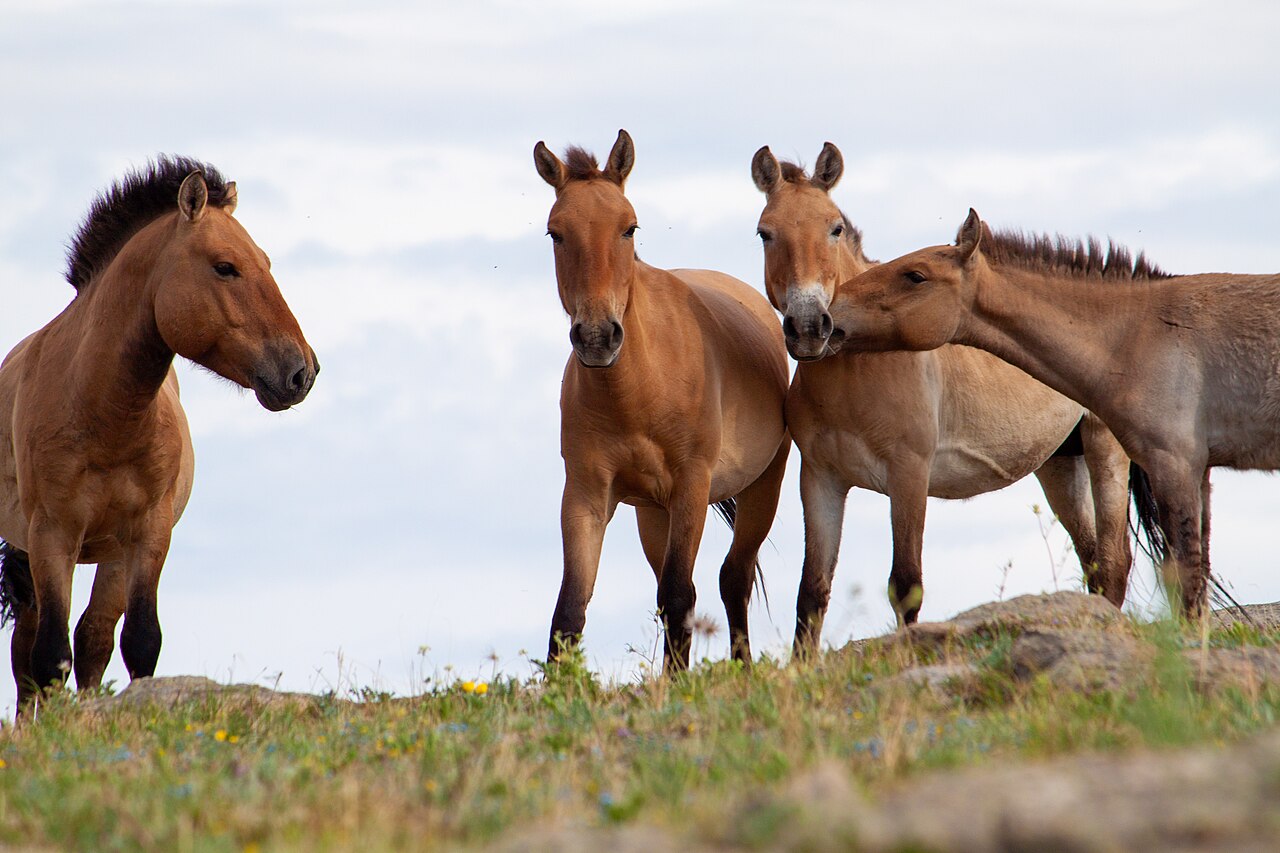
Przewalski’s horse disappeared from the wild in the 1960s and survived only in zoos. Since the early 1990s, it has been brought back to Mongolia, one of the best-known conservation stories in Asia.
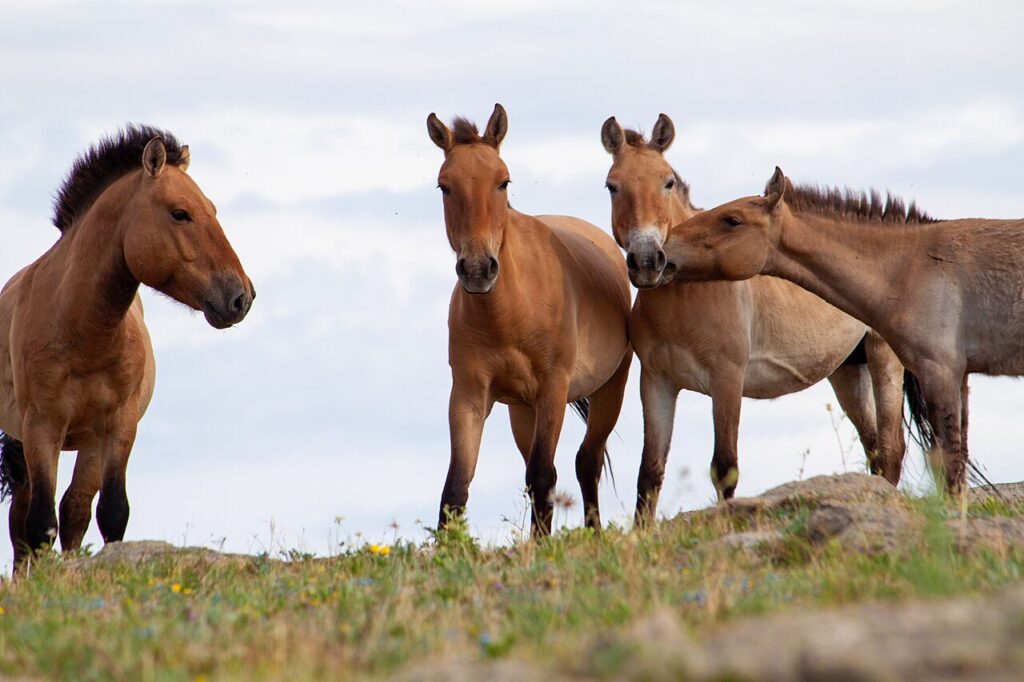
On the hills of Hustai National Park, about 100 kilometres west of Ulaanbaatar, a herd of small, stocky, dun-coloured horses grazes quietly in the morning light. They look much like the domestic horses that Mongolian herders ride, but they are different: they are takhi, the last surviving wild horses on the planet, better known to the world as Przewalski’s horses. Their presence on the Mongolian steppe is the result of a decades-long effort to bring a species back from the edge of extinction.
A horse that is truly wild
Most “wild” horses in the world, such as the American mustang or the Australian brumby, are descended from domestic animals that escaped or were released. The takhi is different. It is a distinct subspecies that has never been domesticated, with 66 chromosomes instead of the 64 of domestic horses. It is short, usually around 12 to 13 hands tall, with a thick neck, a stiff upright mane without a forelock and a pale muzzle. The Mongolian name takhi is usually translated as “spirit” or “spirited”. The Western name honours the Russian explorer Nikolai Przhevalsky, who brought the first specimens to the attention of European scientists in the 1870s.
Takhi once ranged across the steppes of Central Asia and eastern Europe, but hunting, competition with livestock and the loss of water sources reduced them to a tiny area in the Dzungarian Gobi, on the border of western Mongolia and China. The last confirmed sighting in the wild was in 1969. After that, the species was considered extinct in the wild.
Saved by zoos
The survival of the takhi is due to captive breeding. All living takhi are descended from just a dozen or so animals that were captured in the early 20th century and bred in European and American zoos and private reserves. At its lowest point, the global population numbered only a few dozen animals. Breeders kept a studbook, carefully planned matings to avoid inbreeding and slowly built up numbers. By the 1980s, there were enough animals to think about returning some to the wild.
The return to Mongolia
The first groups of takhi arrived in Mongolia in 1992, flown in from zoos in Europe. They were released in two protected areas: Takhin Tal in the Gobi B Strictly Protected Area in the south-west, and Khustain Nuruu (Hustai) in the hills near Ulaanbaatar. A third reintroduction site was established later at Khomiin Tal in the west.
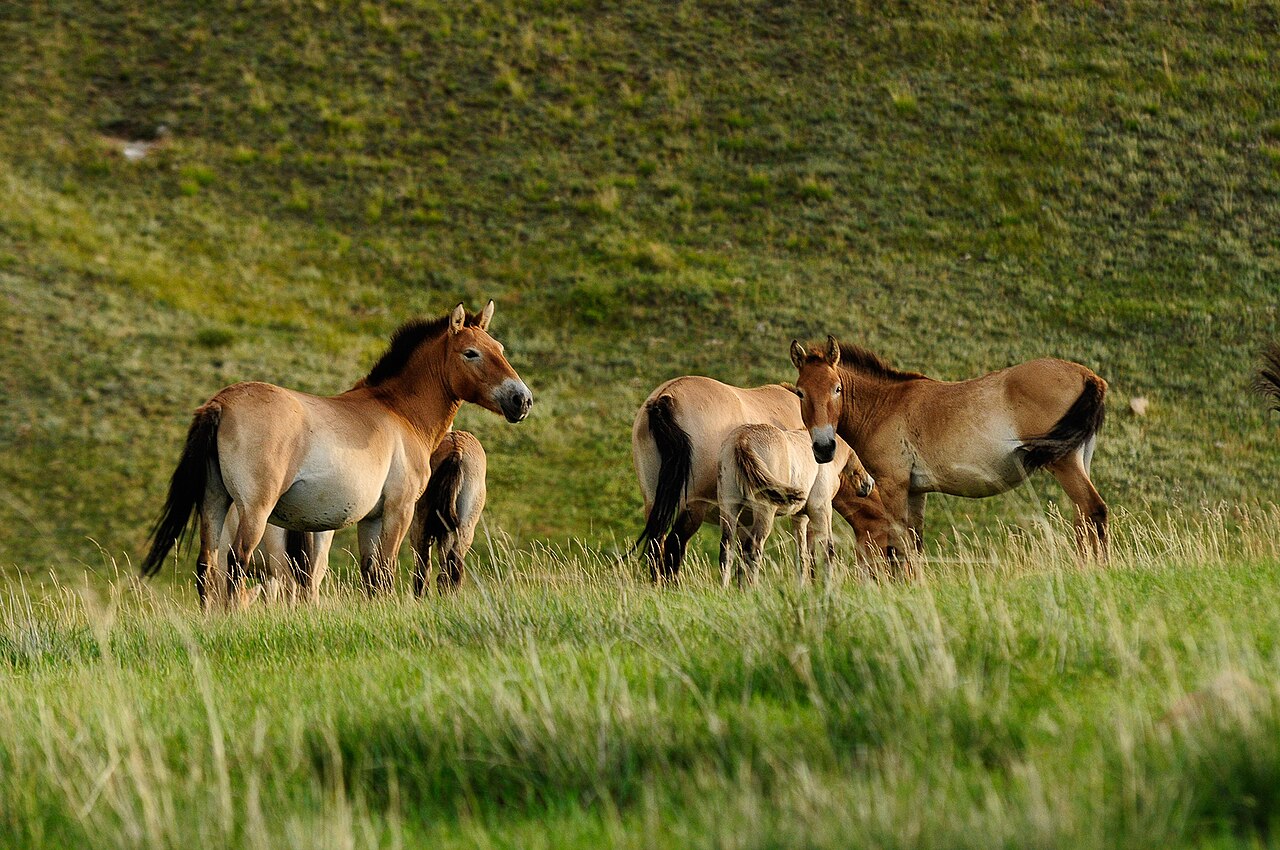
The early years were difficult. Animals born in captivity had to learn to survive winters, find water and defend themselves against wolves. Some died, and severe winters – including the dzud of 2009–2010 – caused significant losses in the Gobi. Over time, however, the herds developed natural social structures, with stallions leading small family groups called harems, and the foals born in Mongolia showed better survival than the first generations.
Today, the global population of Przewalski’s horses has risen to around two thousand animals, according to international conservation groups, and several hundred of them live in free-ranging herds in Mongolia. In 2011, the International Union for Conservation of Nature reclassified the species from “critically endangered” to “endangered”, a rare piece of good news in wildlife conservation.
Challenges that remain
The takhi are not out of danger. The genetic diversity of the population is limited because it descends from so few founders. Pastures are under pressure from livestock, and herders and wild horses compete for water and grass. Climate change, with the possibility of drought and severe winters, is an additional risk. Cross-breeding with domestic horses is another concern, which is why the national parks monitor herds and keep domestic animals away from the main takhi areas.
Conservation groups have also invested in work with local communities. Rangers from nearby soums are trained to patrol the parks, and herders benefit from tourism and from small-scale projects such as felt crafts, homestays and guiding. The Hustai National Park is run by a foundation, and a part of the revenue from visitor fees is used for the protection of the horses and for community programmes.
Seeing takhi
For visitors, Hustai is among the easiest places in Mongolia to see wild animals. It is a day trip from Ulaanbaatar, and the best time to look for the horses is in the early morning or late afternoon, when the herds come down to the valleys to drink. Guides take visitors by vehicle or on foot, keeping a distance to avoid disturbing the animals. Besides takhi, the park shelters red deer, marmots, Mongolian gazelles and many birds of prey.
The return of the takhi shows that, with long-term commitment, international cooperation and local support, a species can come back from the brink. For Mongolians, it is also a matter of national pride: the horse that once vanished is again part of the land’s living history.