In the winter of 1989–90, a handful of young activists, a hunger strike and thousands of people in Sükhbaatar Square ended 70 years of one-party rule, without violence. The story, and what followed.
When the Berlin Wall fell in November 1989, Mongolia was often thought of as the Soviet Union’s most loyal ally. For nearly seven decades, since the People’s Revolution of 1921 and the proclamation of the Mongolian People’s Republic in 1924, the country had been ruled by a single party, the Mongolian People’s Revolutionary Party (MPRP). Soviet troops were stationed on its territory, and its economy was closely tied to Moscow. Yet within a few months, Mongolia had changed its political system, with almost no bloodshed.
The background
By the late 1980s, the Soviet leader Mikhail Gorbachev’s policies of glasnost (openness) and perestroika (restructuring) had created new space for debate throughout the socialist bloc. In Mongolia, the MPRP’s leadership under Jambyn Batmönkh introduced limited reforms and allowed more open criticism. The economy was under strain: Soviet subsidies were shrinking, shortages of goods were common, and many citizens, especially among the educated young, were unhappy with the lack of political freedom.
Small groups of intellectuals, students, journalists and young party members began to meet informally. They drew inspiration from events in Eastern Europe and from the openness that had begun in the Soviet Union itself. Among the best-known figures were Sanjaasürengiin Zorig, a young teacher at the National University, and Tsakhiagiin Elbegdorj, a journalist, who became the public faces of the movement.
December 1989 to March 1990
The first public demonstration took place in Ulaanbaatar on 10 December 1989, International Human Rights Day. A group that called itself the Mongolian Democratic Union announced its formation in front of a crowd of a few hundred people. The authorities did not use force. Over the following weeks, further rallies drew larger numbers, and in early 1990, there were protests in the capital and in provincial cities.
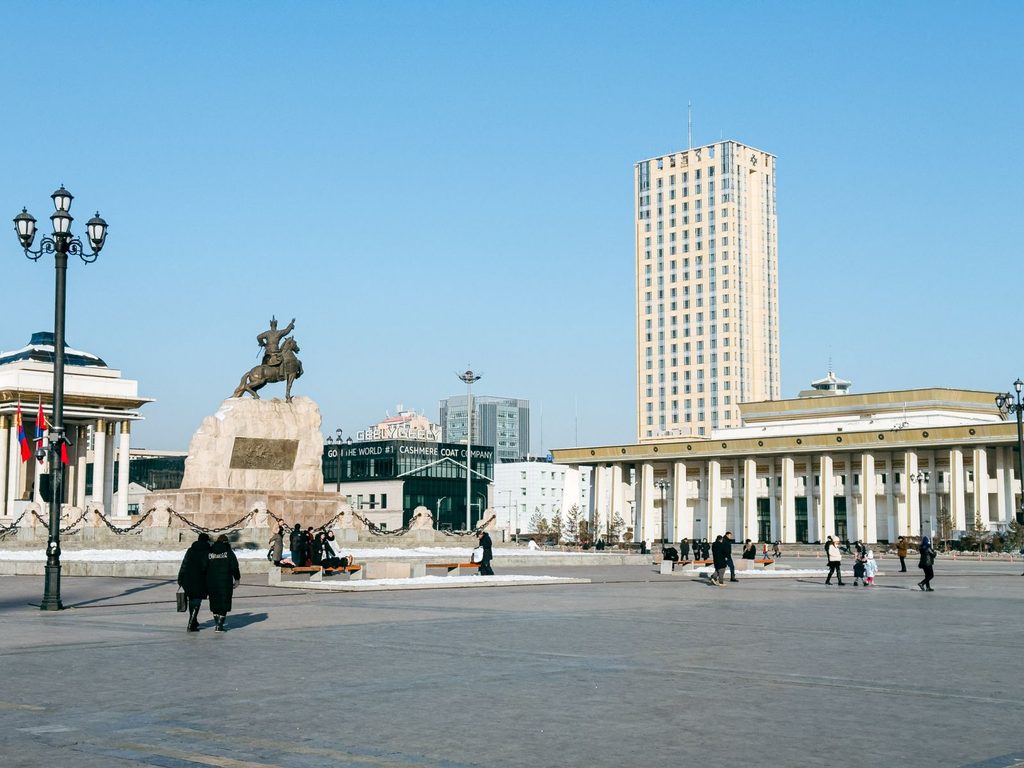
The turning point came in March 1990. Activists began a hunger strike in Sükhbaatar Square, the central square of the capital, and thousands of people gathered each day in freezing weather to support them. They demanded the resignation of the party leadership, free elections and the end of the MPRP’s monopoly on power. On 9 March, after days of tension, the Politburo of the MPRP resigned. In the weeks that followed, and by May at the latest, parliament amended the constitution to remove the clause that guaranteed the party’s leading role, and legal opposition parties were allowed.
First elections and a new constitution
The first multi-party elections were held in July 1990. The MPRP, which had reformed itself and renamed some of its policies, won a majority of seats, partly because the new opposition parties had very little time to organise outside the capital. However, the amended constitution had created a smaller standing parliament, the State Little Khural, and the drafting of a new constitution set the country on a democratic path. Punsalmaagiin Ochirbat became the first president in 1990, elected by parliament, and he was re-elected in the first direct presidential election in 1993.
The new constitution came into force in February 1992. It established Mongolia as a parliamentary republic with a directly elected president, guaranteed rights and freedoms, and abolished the word “People’s” from the country’s official name. In the 1996 parliamentary election, the opposition Democratic Union Coalition won, and for the first time in 75 years, the MPRP lost power through the ballot box.
Hardship and adjustment
The political transformation was accompanied by an economic upheaval. The withdrawal of Soviet support, which was followed by the Soviet Union’s collapse in 1991 and the departure of its troops from Mongolia in 1992, led to a sharp fall in output, severe shortages and high inflation. The government introduced rapid market reforms, privatised state companies and distributed livestock to private owners. For many families, the 1990s were a time of hardship, with rationing, unemployment and, in the countryside, a return to subsistence herding.
The years since have been marked by a lively but sometimes turbulent political life. Elections are held regularly, power has changed hands between parties several times, and the media is largely free. At the same time, Mongolians have expressed concern about corruption, the influence of business interests on politics, frequent changes of government and the concentration of power in a few parties.
Remembering Zorig
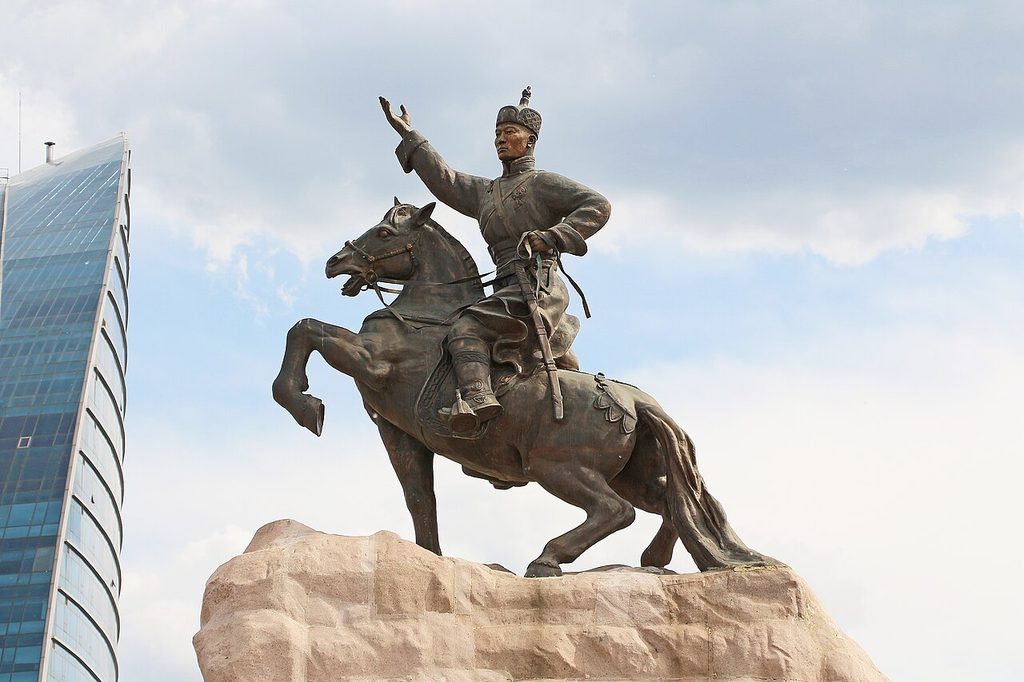
One of the most painful events in the country’s recent history was the murder of Zorig in October 1998. Only 36 years old at the time, he was a minister and had been nominated as prime minister candidate when he was killed at his apartment. Several trials and investigations have followed, but many Mongolians feel that the case has never been fully explained. A memorial statue stands in the capital, and each year people gather on the anniversary of his death.
Why 1990 still matters
Mongolia’s transition is often cited as an example of a peaceful change of regime in a country with limited democratic traditions, a small population and powerful neighbours. Observers note that it was achieved without violence thanks to a combination of a determined and disciplined protest movement, a leadership that chose to negotiate rather than to resist and a favourable international context.
For Mongolians, the anniversary of the 1990 democratic revolution is a reminder that political rights were won by ordinary citizens standing in a cold square, and that they have to be maintained. The success of the system today is measured less by the events of 1990 than by whether its institutions can serve citizens fairly and transparently.