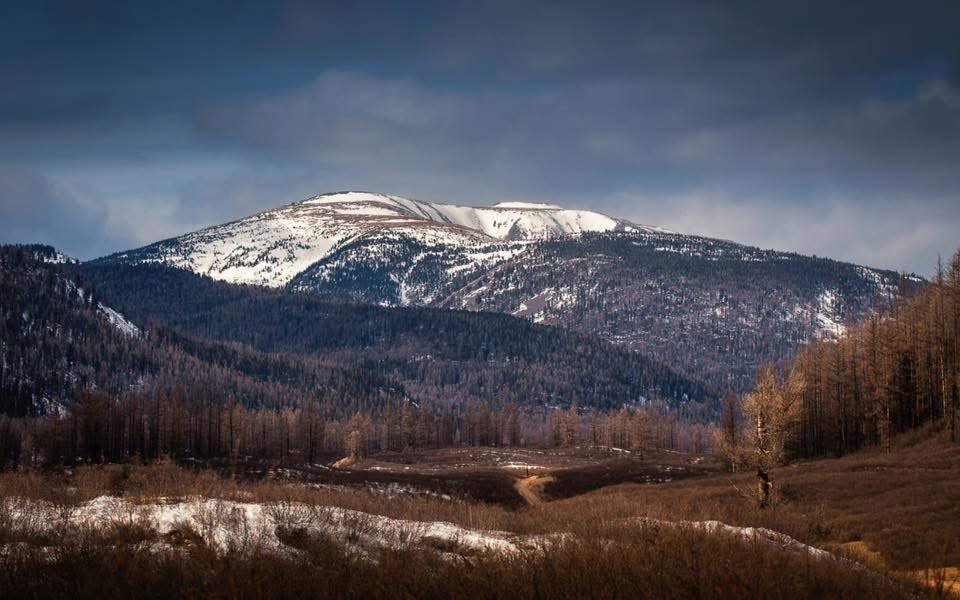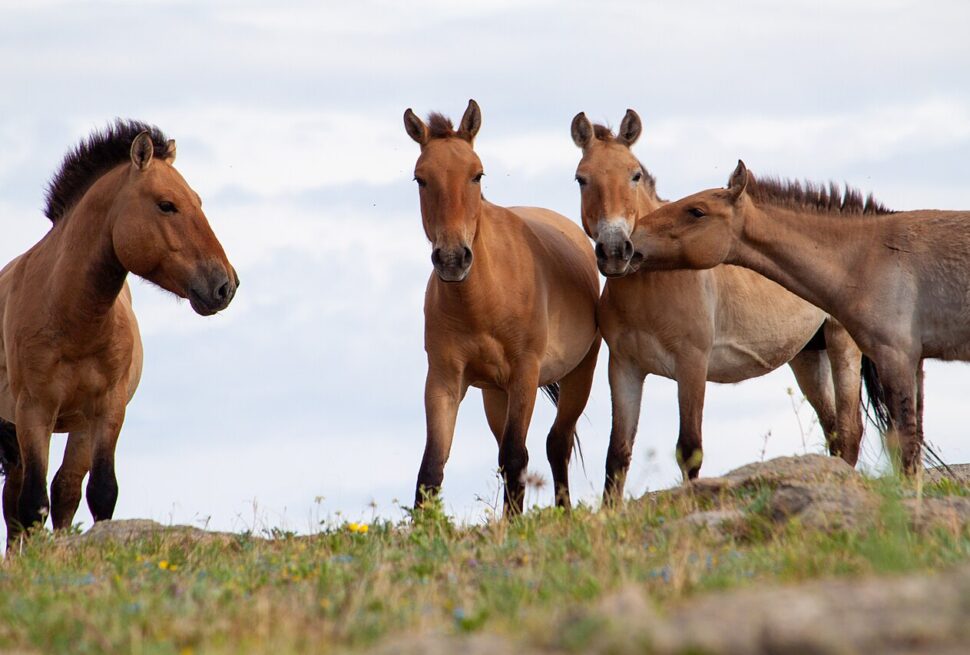
When you think of the Gobi Desert, a few certain images spring to mind. A quick canvas of our fellow travellers brought back everything from camels and sand dunes to a barren wasteland. But, the real Gobi is so much more. The true Gobi is full of life and variety, a place of mountains and plains, stillness and sound, peacefulness and storms. It’s a place where history reaches forward from the past in the people who live there today.
Khongoryn Els
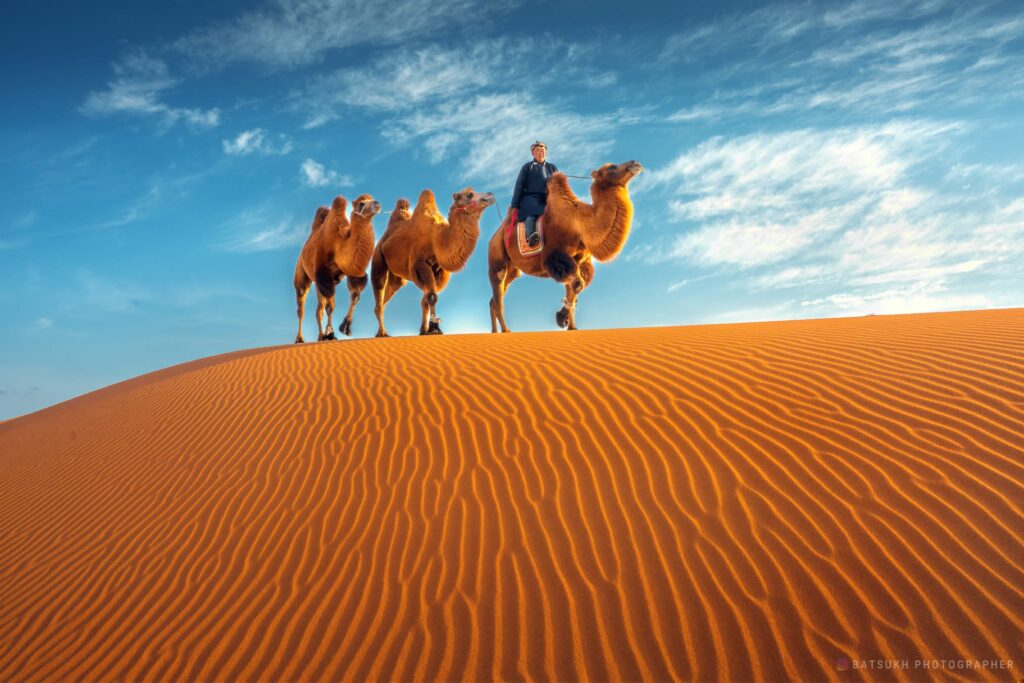
100 km long, up to 7 km wide Khongor sand dunes or the Khongoryn Els, also known as the SINGING DUNES is one of the top attractions in the Gobi desert. The dunes tower about 300 m above the Gobi desert plain. The locals call the highest dune as a Singing Dune because of the high-pitched airplane engine like sound created by the wind blow over the dune. Climbing the highest dune is a challenge. Therefore, most visitors choose to climb bit lower peaks where people can hear the Sand Singing when spreading the sand northwards against the wind.
Khongor sand dune covers 965 km2 of area and is a part of the Gobi Gurban Saikhan National Park.
The northern edge of the dune borders with green meadows of a small river Khongoryn Gol, fed by underground sources from the surrounding mountain while majestic Noyon and Sevrei Mountains towers in the south of the sand dune.
The Khongor sand dune stretches east to west – the eastern edge of the dunes parallel with Bayan Bor Nuruu /mountain in west Saikhan Mountain while the western edge meets another 80 km long sand dunes.
A tour to the Gobi desert is incomplete without a visit to Khongoryn Els.
Visitors who climb one of the higher dunes will be rewarded with awe-inspiring views of the surrounding area or see spectacular Gobi desert sunrise and sunset. The ascent takes an hour and three hours in a return way.
The Flaming Cliffs at Bayanzag
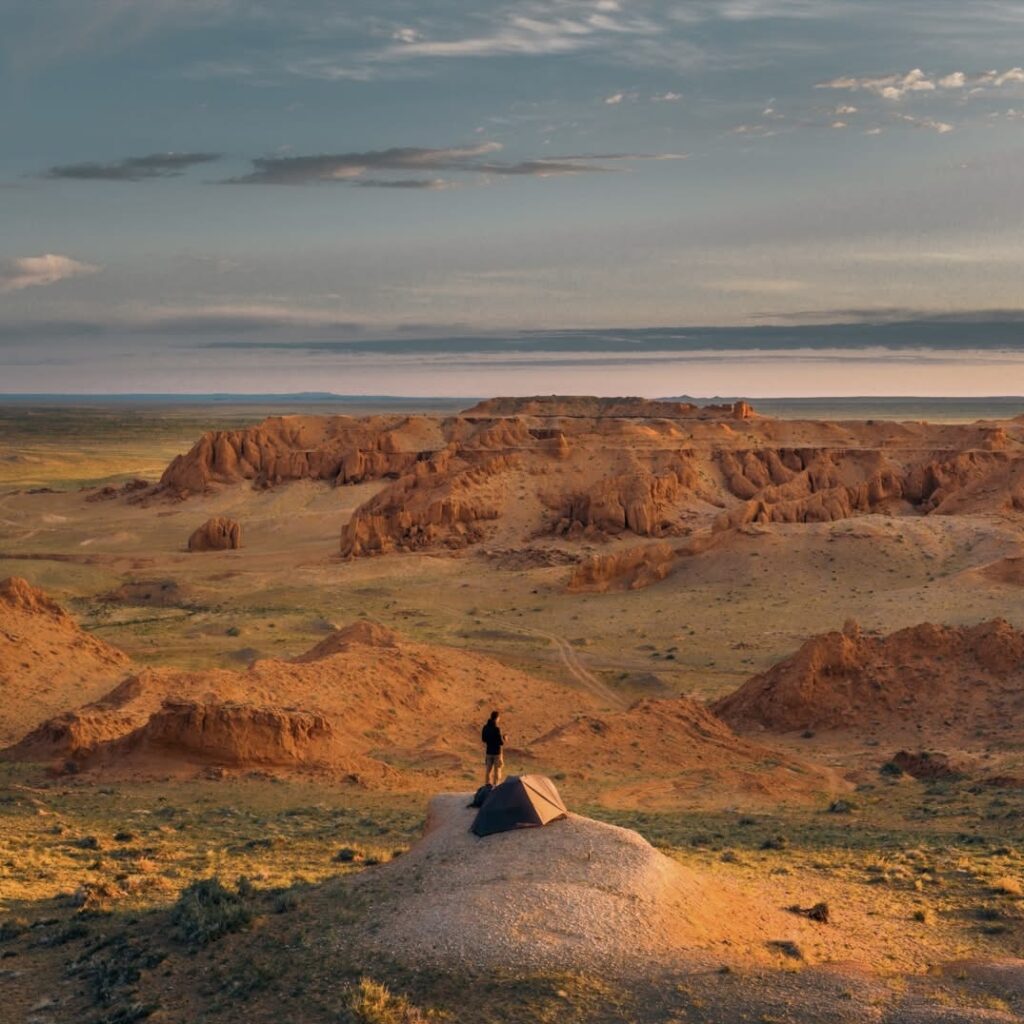
Red sandstone cliffs and canyons, Flaming Cliffs is one of the most famous paleontological sites in the world. The area was so named by the American paleontologist Roy Chapman Andrews due to its outstanding orange color seen at sunset.
Among the numerous fossils excavated here, Roy Chapman Andrews’s discovery in 1922 of the first dinosaur eggs ever revealed in the world made the area famous. Thus the paleontologists hypothesized that the dinosaurs gave birth babies.
There is a small ger museum that shows pieces of fossils while the Dinosaur Museums in Ulaanbaatar and the worldwide exhibitions display the main exhibits discovered here.
A vast-open grassy desert steppe surrounds the Flaming Cliffs. There are are several ger camps on the plain steppes that provide 360° vast-open views, amazing sunrise, and sunset.
5 km to the north of Flaming Cliffs is a Saxual tree (Haloxylon ammodendron) grove known as Bayanzag. This tree tolerates dryness and droughts of the Gobi desert, sometimes used as an emergency fodder for camels or as a fuel by the desert nomads. The tree grows 1.5 m up to 4 m in height.
The tree prevents the Gobi desert soil from wind erosion and reduces the expansion of desert sands.
Yol Valley
Yolyn Am (Vulture’s Mouth) was originally established to conserve the birdlife in the region, but it’s now more famous for its dra-matic and very unusual scenery – it is a valley in the middle of the Gobi Desert, with metres-thick ice almost all year-round.
The small nature museum at the gate on the main road to Yolyn Am has a collection of dinosaur eggs and bones, stuffed birds and a snow leopard. There is also an ethnography museum in a ger, which is worth a visit.
Look out for the remarkable petrified wood lying by the roadside. The ranger office and museum sell some good souvenirs, including landscape paintings and, amaz-ingly, one of the best collections of Mongolian stamps in the country.
From the museum, the road continues for another 10km to a car park. From there, a pleasant 25-minute walk, following the stream, leads to a gorge full of ice. In winter, the ice is up to 10m high, and continues down the gorge for another 10km. It remains frozen for most of the year, except lor about a month starting in late August.
You can walk on the ice – but be careful, especially in late summer.
The surrounding hills offer plenty of opportunities for some fine, if somewhat strenuous, day hikes. If you are lucky you might spot ibex or argali sheep along the steep valley ridges.
Mukhar Shiver. This location is very similar to Yolyn Am and it has been made into a protected area. As a result, entering the area by car is forbidden. Like Yolyn Am, it is frozen almost all year round and is surrounded by rocks.