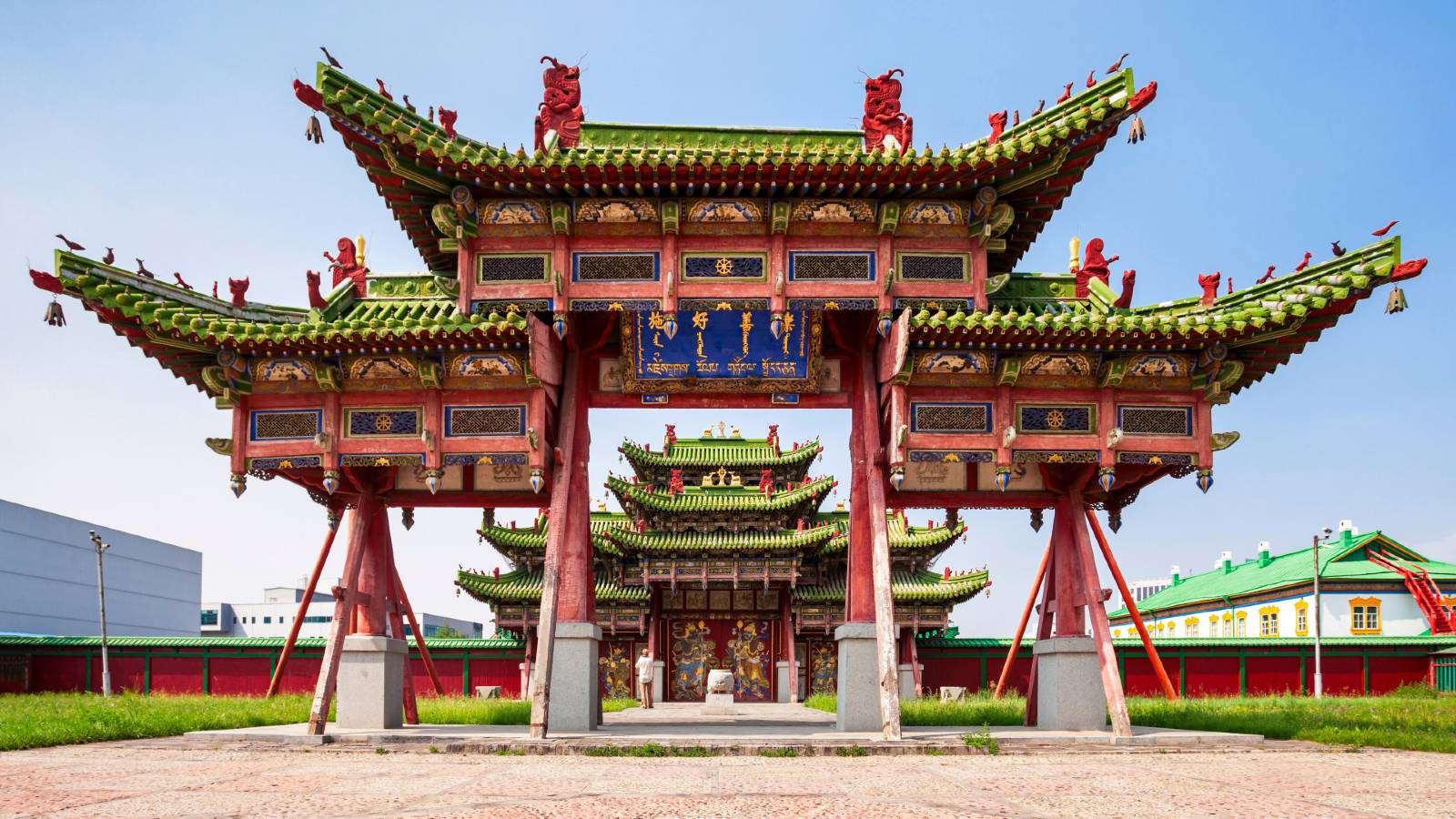
One of the first museums in Mongolia, the Winter Palace of Bogd Khaan, was built in 1924. The winter palace was once the winter home of Javzandamba, the final Bogd Khaan of Mongolia. The winter palace complex, which was constructed between 1893 and 1903, is renowned for housing Bogd Khaan’s personal library, Temple, and Gate of Peace. Sculptures by the renowned Taras, the first Bogd Khaan Zanabazar of Mongolia, are on display in the museum. There are 21 priceless Taras sculptures in the museum.
Over 8,000 exhibits make up the collection at the winter Palace Museum, 72 of which the State has designated as unique while the rest are valuable relics. Every year, the museum receives 19–20,000 visitors, of which 70–80 percent are foreigners.
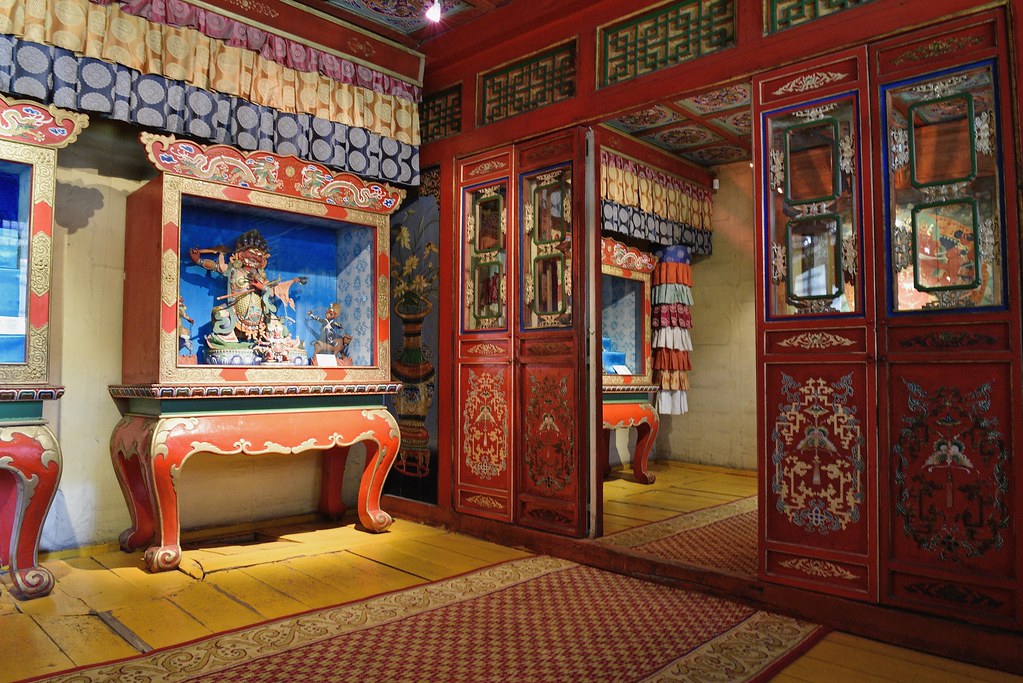
This is the only remaining palace out of four residences where Bogd Khaan, the last Mongolian ruler, resided. The palace now displays the collection of personal belongings of the last king and his wife, as well as a wide variety of priceless religious and cultural artworks, Mongolian art ranging from statues of gods, tankas, and papier-mache many of which are produced by the first Bogd Khan’s rule.
This well-preserved museum and palace complex consist of traditional Mongolian temple-style structures along with a 19th-century manor-style housing complex replete with stuffed animals taxidermy from the Khan’s collection of animals. Although they have survived the communist era, the animals from the Bogd Khan’s private zoo currently seem a bit listless. The jewelled regalia worn by Bogd Khan’s pet elephant, which he imported especially, is on display inside the palace.
Other curios await the visitor, including a richly decorated ger lined with the skins of 150 snow leopards, complete with gilded ephemera illustrating the stark contrasts of how wealthy classes compared to everyday Mongolians lived during this period. Mongolia’s Declaration of Independence (from China in 1911) is among the exhibits.
If you like Mongolian history and want to learn more about Mongolia, the place is open for a public and private tour. The tour ensures travelers visit the winter palace and spend time meandering through the rooms as well as the courtyard.
Structure of Bogd Khan Palace Museum Complex
Out of the four buildings where Bogd Khaan, the last Mongolian emperor, lived, this is the only one still standing. The last Khaan and his wife’s personal collection of items are currently on exhibit in the exhibition hall. Buddhist artworks are available in a wide range in the museum. Drawings by Marzan Sharav that humorously and ironically portray situations from Mongols’ daily lives at the turn of the 20th century draw particular notice.
The Bogd Khaan Palace Museum is divided into two sections: the summer palace, which has 7 temples and pagodas, and the winter palace, a two-story, white building designed in the manner of European palaces.
The Bogd Khaan and his queen, Dondogdulam Khatan (1874–1923), spent 20 winters at the winter palace, which was constructed as a project by Tsarist Russian architects (1893–1903).
The palace of the bogd contains a ger and a chariot in addition to the Khaan’s clothing and personal items, providing insight into his lifestyle, interests, activities, as well as the things he wore and utilized.
The summer palace is largely filled with old statues of gods. So, to worship the sky as well as water spirits, two significant religious ceremonies are used here and performed twice a year. A tent that exhibits sculptures of horses, animals, and birds is also there.
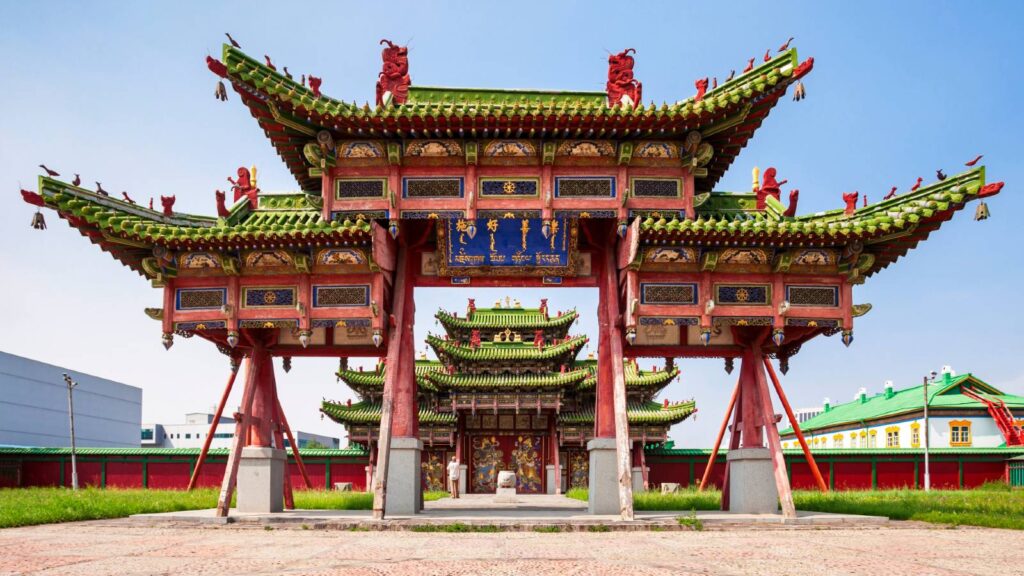
Andi Men – Peace Gate
After the Mongolian struggle for independence from the Manchu empire was successful at the end of 1911, this gate was built between 1912 and 1919 to commemorate the eighth Bogd’s coronation as an absolute monarch. Renowned architects, constructors, blacksmiths, and artisans from all around Mongolia created and built it. The gate was made for commemorating eight bogd coronations for winning independence against the Manchu emperor. The gate is distinctive in that it was built utilizing 108 different types of interlocking joints rather than a single nail. The gate is elaborately embellished with carved and painted symbols as well as pictures that symbolize numerous facets of Buddhist symbolism. It is composed of 8 supporting posts and a seven-tiered canopy.
Makhranz Temple
Sanskrit, Tibetan, Mongolian, Manchu, and Chinese letters all appear on the blue wooden sign that reads “Temple of developing Wisdom” and is framed by ornate golden dragons. In 1893, the temple and the papier-mâché statues of the four Makhranz were constructed.
According to common Buddhist legends, four continents of the world are said to extend from Sumber Mountain’s four sides, which is where the universe is said to be located. One of the phenomenal protective deities guards every continent against all visible and invisible threats.
Temple of Silk Embroideries
Under the direction of a few of the most renowned architects from Khuree/now Ulaanbaatar/, over 130 artists and artisans were called to work here, creating royal clothing for the emperor and queen, things for use in religious rites, and other things for the palace. Mongolian silk embroidery advanced to the same creative level as more conventional painting in the 19th and early 20th centuries considerably more rapidly than other forms of art. The museum’s collection includes a number of quite substantial and priceless examples of beautiful needlework.
One unique characteristic of these works of art is that despite strictly adhering to the canon of Tibetan Buddhism, they nonetheless manage to capture the distinct artistic essence of the Mongols.
Thangka Temple (Religious Painting)
Thangka paintings proliferated throughout Mongolia at the same time as Tibetan Buddhism’s “yellow faith” was growing. The thangka painting necessitated the artist to adhere to rigorous instructions and engage in essential meditations.
The museum showcases numerous exceptional pieces created by Ikh Khuree (Ulaanbaatar) artists in the late 19th and early 20th centuries, including well-known artists like Jugder, Khasgombo, and Gendendamba as well as lesser-known Ikh Khuree school members. The Thangka painting laws forbid the artist from signing the finished piece, hence it is regrettable that it is difficult to identify these creators.
One noteworthy aspect of Mongolian thangka paintings is that the creators were able to demonstrate their unique artistic abilities while adhering to the strict rules of the artistic style of Tibetan.
Lavrim Temple
The primary religious icons of the Ylll Bogd were kept in this temple, which was also where people went to pray and meditate during the summer.
Undur Gegeen Zanabazar (the “great enlightened”), the first Bogd of Mongolia, was probably born in 1635 as the son of Khalkh Tusheet khan Gombodorj, a member of Chinggis’ Golden Horde. Zanabazar also referred to as “Undur Gegee” or the “High Enlightened,” rose to prominence in his era’s religious, societal, political, and historical affairs. The Bogd saint Jivzund-amba, the head of the yellow faith, should take on his first form, the four Khalkh monarchs resolved at a meeting when he was 4 years old.
The well-known and accomplished Mongolian sculptor Zanabazar. His sculptures stand out for their precision, transparency, and composition. Despite being religious,